Cricket scores explained
Cricket Score Guide: Read a Live Score and Scorecard
A cricket score becomes more useful when you can read the innings behind it. Understand runs, wickets, overs and partnerships, then compare the current scoring rate with the chase. Aurus explains the language of a live cricket score without presenting static numbers as a live feed.

Table of Contents
A route through cricket scores
Build your understanding of cricket scores in stages. Each step adds context that a headline or a short score line can leave out.
Cricket guide
Start with the vocabulary
Use the main guide to identify the terms that appear most often in cricket scores. Clarify the format and the innings before moving to a more detailed explanation.
Cricket guide
Connect terms to a scorecard
Open a completed match record and locate the batting card, bowling figures and fall of wickets. This makes it easier to connect a definition with an actual part of an innings.
Consider match resources
Track wickets and deliveries as well as runs. The same score can describe different situations when one side has more overs or more established batters available.
How to follow cricket scores
Use this sequence when a match report or scorecard sends you looking for a clearer explanation of cricket scores.
Confirm the match
Start with the team category, date and competition. Check whether the fixture is a Test, ODI or T20 before applying an explanation to its scorecard.
Read the innings position
Use the innings label, runs, wickets and valid balls to establish the position. That gives the discussion of cricket scores a clear starting point instead of an isolated number.
Add the conditions
Consider the surface, the phase of the innings and the available players. Those details can change the meaning of a scoring rate or a bowling spell.
A closer look at cricket scores
Aurus Cricket focuses on explaining cricket scores for readers following cricket in India. The aim is to make the match easier to understand through definitions, examples and context.
Read the guide
What this guide covers
The main sections address cricket scores, with related explanations of scoring, formats and match conditions. They are written for readers who want to understand the record rather than just scan a result.
Reading a match report
A match report becomes clearer when you identify the format, innings and remaining resources first. For current fixtures, selections and results, check the official event source.

Where rules come from
The Laws of Cricket maintained by MCC provide the foundation. ICC and competition playing conditions supply event-specific details. The source links below help you check the relevant document directly.
Learning from examples
Worked examples connect the definitions with the numbers in a scorecard. Use them to practise reading an innings, then check the calculation against the full match context.
Rules and formats: MCC Laws of Cricket · ICC playing conditions · ICC format guide
Keep the cricket context in view
Use the cricket scores guide to connect definitions with the match you are following. Check current fixtures, line-ups and results at their official source.
Read the guideCricket grounds and match themes
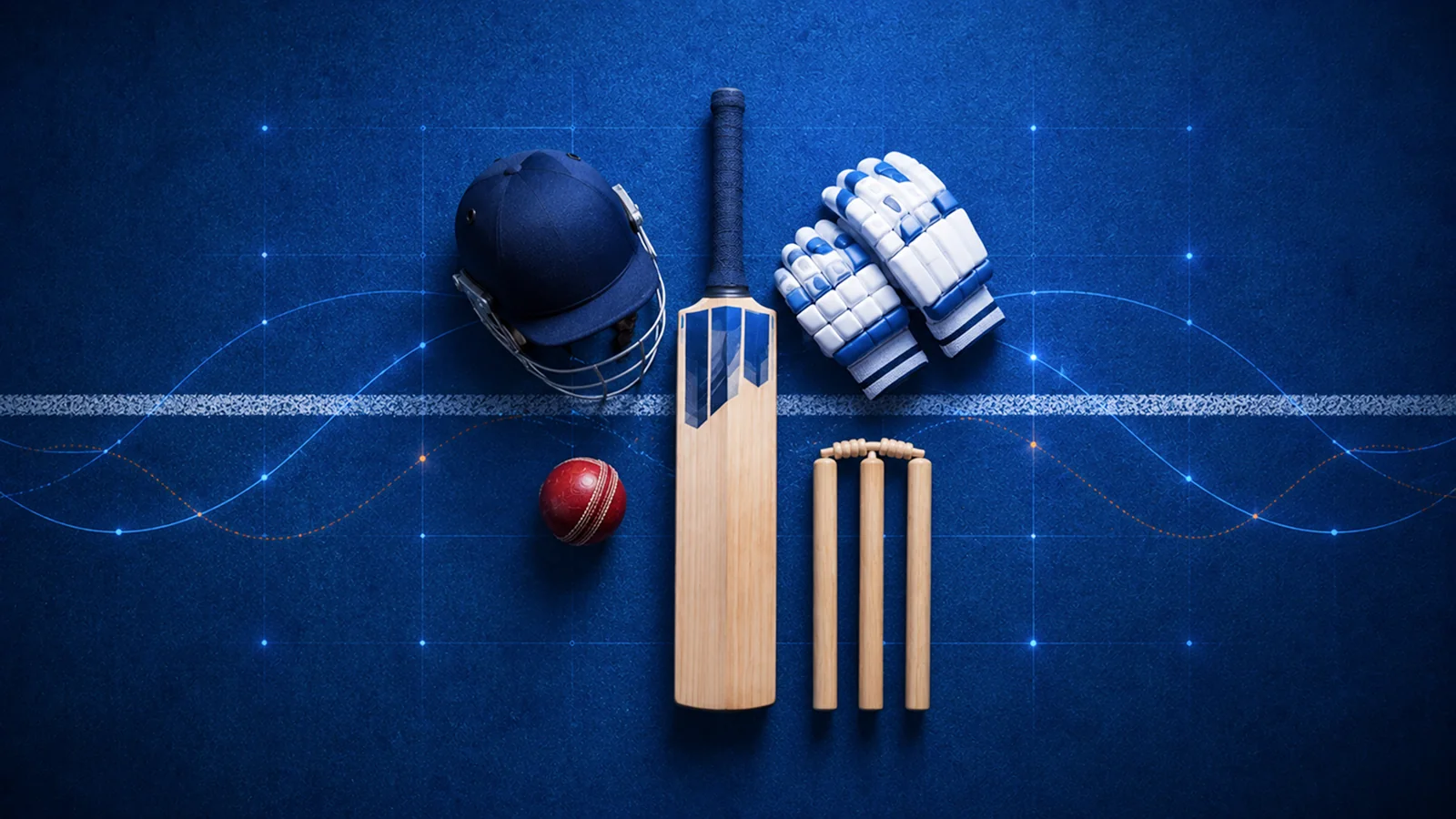
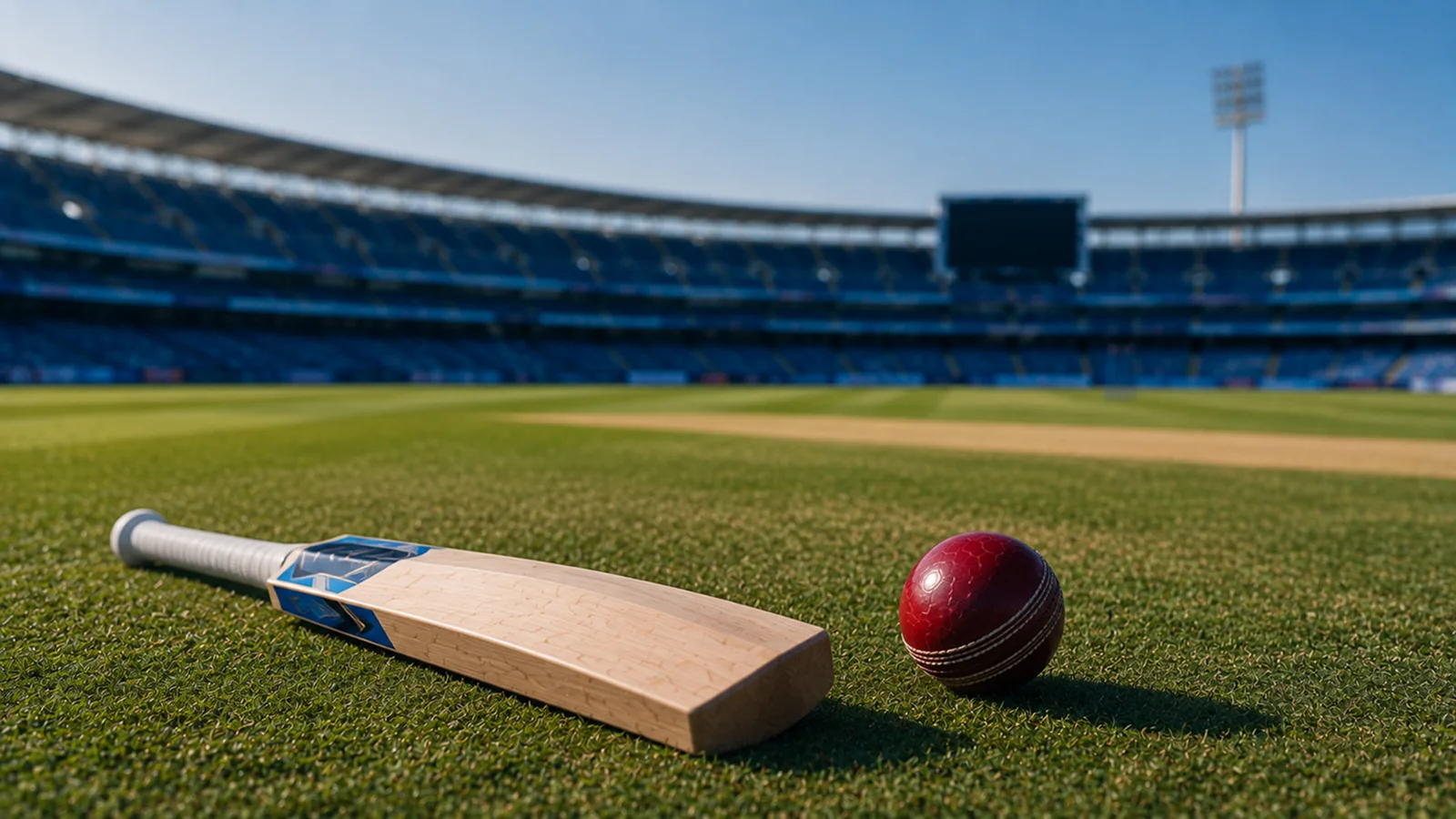
Selected cricket illustrations introduce the formats, conditions and competitions discussed in this guide. These images are thematic, rather than photographs documenting a specific fixture.









Keep the cricket context in view
Use the cricket scores guide to connect definitions with the match you are following. Check current fixtures, line-ups and results at their official source.
The main score shows the team’s runs and wickets lost. A separate overs figure tells you how far the innings has progressed. Always check which team is batting and which innings is on screen before comparing two totals, especially in a Test match.
Cricket overs use base-six ball notation. At 12.4 overs, 76 valid balls have been completed: twelve times six, plus four. Treating 12.4 as an ordinary decimal gives the wrong run rate and the wrong number of balls remaining.
A batting scorecard records how many runs each batter made and the balls faced, alongside boundaries and dismissal information. Strike rate expresses runs per hundred balls faced. A short, fast innings and a longer supporting innings can serve very different purposes.
Understand cricket scores
These explanations connect cricket scores with the match record. Read each detail alongside the format and the state of the innings.
Read the guideRead the score line
The main score shows the team’s runs and wickets lost. A separate overs figure tells you how far the innings has progressed. Always check which team is batting and which innings is on screen before comparing two totals, especially in a Test match.
Convert overs into balls
Cricket overs use base-six ball notation. At 12.4 overs, 76 valid balls have been completed: twelve times six, plus four. Treating 12.4 as an ordinary decimal gives the wrong run rate and the wrong number of balls remaining.
Understand a batting card
A batting scorecard records how many runs each batter made and the balls faced, alongside boundaries and dismissal information. Strike rate expresses runs per hundred balls faced. A short, fast innings and a longer supporting innings can serve very different purposes.
Understand a bowling card
Bowling figures usually list overs, maidens, runs conceded and wickets. Economy rate measures runs conceded per over. Read it beside the phase bowled: operating with the new ball, through the middle overs or at the death creates different demands.
Follow a run chase
Compare runs still required with valid balls remaining. The required run rate can rise even after a boundary if several quiet deliveries follow. Wickets in hand and the remaining batting order explain why identical score lines can produce very different match situations.
Cricket scores: common questions
Does this page provide a live cricket score?
+
What does 15.2 overs mean?
+
How is batting strike rate calculated?
+
What is a required run rate?
+
Why can a team total exceed the batters’ runs?
+
Why do two live score services differ briefly?
+